Thursday, 11 August 2011

Final Design Photos


Final Design

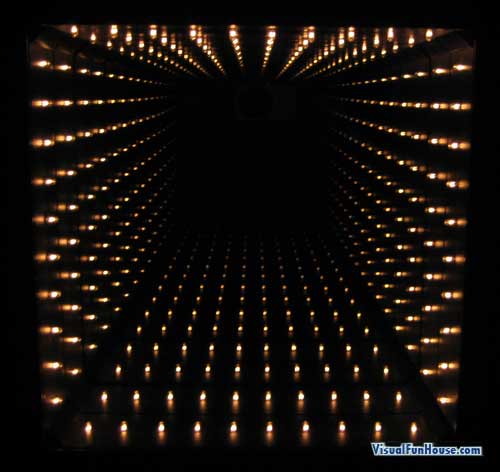
As you can see the l.e.d relfection is completely giving the illusion of space. It creates an arm size hole that looks like it carries on into the table for a long distance. I found through iterations of my design that the distance of the two mirrors greatly influences the pattern created. I chose the closest reflection distance to make the reflections smaller in distance but it also creates a  larger illusion of space.

Iam very happy with my project and believe it incompasses all degrees of sight and cognitive interaction.

Prototype 5

Lastly I decided to keep the same l.e.d's as I started with. These l.e.d's are bright, simple and clean. A simple off/on design it is useful in focusing attention on the design itself and the illusion any light within the certain parameter's of the design would have instead of making the user concentrate on how pretty the lights look, the design is about the interaction of making your own simple pattern and also by trying to understand how the illusion is made.

The design should make the user feel curious about how the illusion is constructed, but the main interaction is the visual effect of the illusion.

Prototype 4

 
This image shows again the size of the design and also importantly the thin circle of paper that will be used to go over top of the final mirror tint. The reason for this is to block out in surrounding light that may refract the l.e.d's light path. It is also more visually appealing as a final design because it adds effect to the over-all aesthetics of the design. The project has a lot of potential to either look well crafted or poorly crafted and I believe something as small as a strip of coloured paper can really improve the look of the design.

Prototype 3

This 17.5cm diameter circle will be a perfect size for the interactive projection as it is still a comfortable hand held size, the 2cm thick cylinder will also aid the design. The mirror tint hase been applied completly flat against a piece of plexiglass that I cut and shaved to size, the plexiglass is a completely flat, completely clear material which is perfect to apply the tint to and will also help reflect the l.e.d's better.

Prototype 2

In this image the illusion is working well. As you can see the l.e.d's are being relfected against each other from the mirror tint on both sides, the project is successful.

From here I want to refine the craftsmanship of the project and also play with size. I want to make a slimmer cylinder and a larger one too. I think the illusion and interactivity will be more effective if the cylinder was bigger as it creates a more interesting concept and illusion.

Prototype 1

This prototype is a simple test to see if the project was possible, not the round shape, even spacing and black inner paint as features to enhance the effect of the visual illusion.

The plan from here is to have a layer of mirror tint on top and on the bottom of the cylinder, this way the l.e.d's are reflecting constantly from side to side, creating the illusion of space between the relatively thin cylinder.

I'm happy with the development of the project and I think if I can get the mirror tint to sit flat against one in other in the reflection then the illusion of space will be greater with every successful reflection.

Monday, 1 August 2011

Interaction Design Research

I wanted to use sight as my sense for the interaction design, because it is something that doesn't need a lot of control or instruction, the interaction is immediate. For this reason I want to explore the idea of optical illusion for my interaction.

I want to use light as a medium for interaction.